

Onick Gwayi
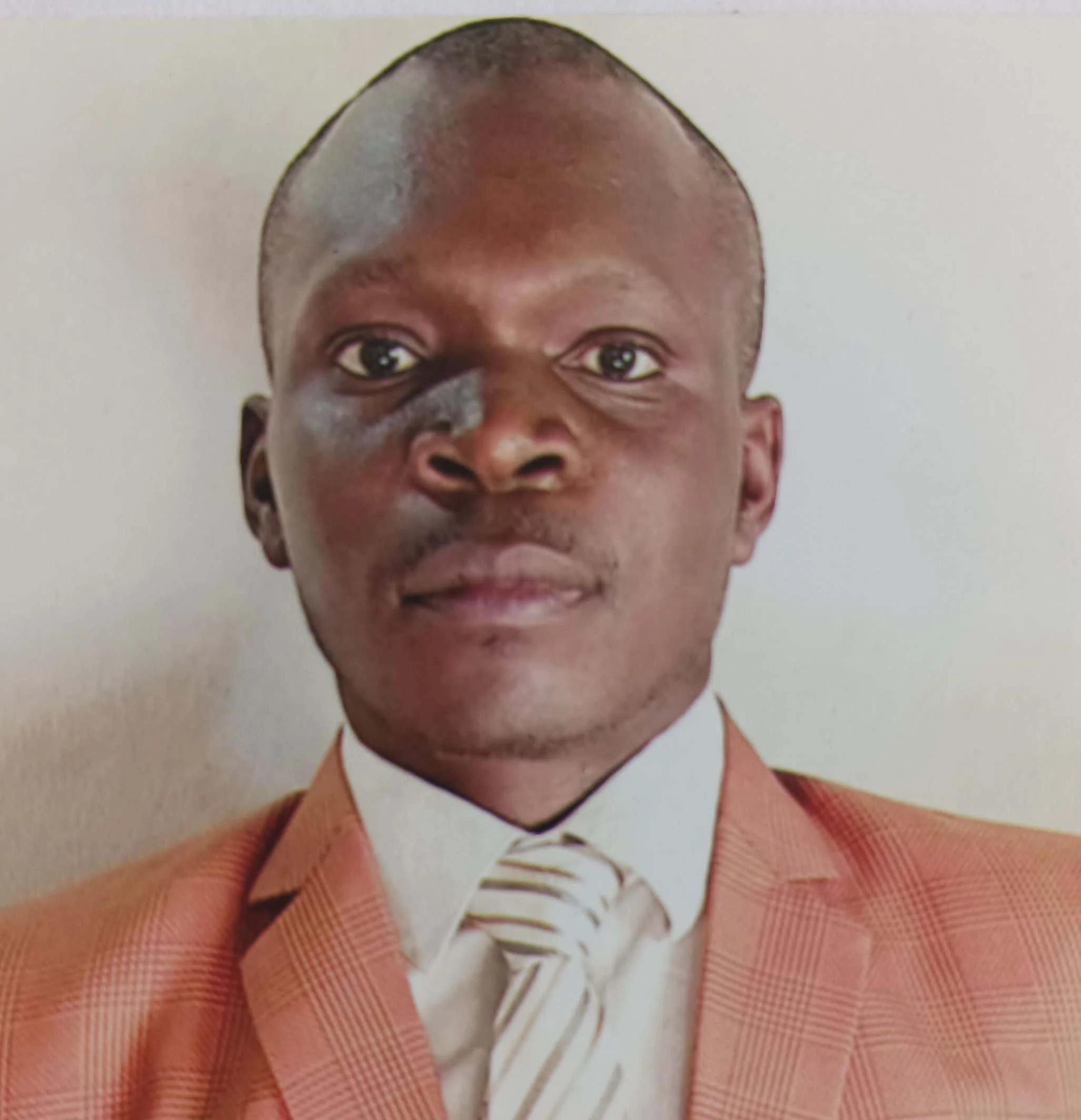
Onick Gwayi
What Did you enjoy about the Classes?
I have gained new skills especially on data analysis using software such as SPSS.
PROFILE
Name: Onick Gwayi
Email: onickgwayi@gmail.com
Onick Gwayi is a Lecturer, Researcher, and Advocate for Geospatial Solutions in Malawi who is also a dedicated geography lecturer and researcher at Domasi College of Education in Malawi, where he conducts important geographic information systems (GIS) research and supports teacher training. His dedication to interdisciplinary approaches to sustainable development and public health is reflected in his academic background, which includes teaching qualifications and an Associate of Science in Health Science.
Gwayi's research centres on the use of GIS in solid waste management, addressing key issues related to public health and the environment in Malawi's cities. He aims to enhance community resilience, reduce pollution, and improve waste collection systems. To position Malawi as a leader in geospatial innovation in Africa, he actively publishes his research, collaborates with local authorities, and mentors emerging researchers.
As a lecturer, Gwayi motivates students to apply spatial analysis to solve societal problems by emphasising practical, solution-focused learning. Beyond community engagement, he partners with non-governmental organisations to promote public health education and environmental sustainability.
Gwayi's work emphasises the importance of data-driven decision-making in addressing environmental and health crises. "Knowing the geography of health is pivotal to breaking cycles of poverty and inequality," he states.
In Malawian academic circles, his contributions to research and community development are well recognised. Onick Gwayi exemplifies how combining geography and public health expertise can lead to meaningful change in Malawi and beyond.
COMPLETED ACADEMIC QUALIFICATIONS
A. UNDERGRADUATE QUALIFICATIONS
1. Bachelor of Education (Humanities) with Credit
Institution: University of Livingstonia, Faculty of Education, Laws Campus, P.O.
Box 112, Mzuzu, Malawi.
Study period: August 2009 to August 2013.
Major subject: Geography.
Minor subjects: History, Social and Development Studies.
Mode of study: Face-to-face/Onsite.
Bachelor of Education (Humanities) (Thesis): Impact of Shallow Wells Program
on Water, Sanitation and Health Status of the people in Kathibi.
2. Associate of Science in Health Science (Honors)
Institution: University of the People, Department of Health Sciences, 595 E
Colorado B1vd Suite 623, Pasadena, CA 91101, United States of America.
Study period: January 2019 to February 2022.
Mode of study: Online.
PROFESSIONAL CERTIFICATES
1. Certificate of Completion in Research Development at Shape Research and Skills Consultancy, Zomba, Malawi in 2023 which was delivered online.
2. Certificate of Recognition for Reviewing YALI Regional Leadership Center Applications at YALI Regional Leadership Center, Pretoria, South Africa in 2023.
RESEARCH EXPERIENCE
Research Methods courses in Geography, Education and Health Sciences both at undergraduate and post-graduate level equipped him with knowledge on development of research proposals and carrying out academic research study using quantitative and qualitative approaches and writing research reports. The understanding of research findings, dissemination, publication and how the findings can inform public and private sector and practice, management act as the basis for further research.
As an investigator, he has conducted academic research on various topics as highlighted in the preliminary pages.
Ensuring that quantitative and qualitative research is of highest standard conducted in a rigorous and ethical manner.
Ensuring that research results firstly inform relevant authorities and secondly research participants by observing all principles of research ethics.
Analysing data quantitively (via use of SPSS and Excel) and qualitatively (content analysis, data reduction and thematic approach, among others)
Disseminating research findings at different International Research Conferences as indicated in the preliminary pages of this curriculum vitae.
Publishing academic research on various topics in the field of Geography and Education in different local and international journals.
Assisting students in identification of researchable areas, offering guidance and supervision for the development of students’ research proposal, thesis and research reports.
Participating in the identification of researchable areas at the department level and ensuring its research proposal development and implementation of the research findings.
B. CERTIFICATE OF ATTENDANCE IN CONFERENCES
1. Certificate of Participation, 4th International Conference on Educational Technology and Online Learning, held on May 15 to May 17, 2024.
2. Certificate of Attendance, INTEREST 2021 held on October 12 to October 14, 2021.
3. Certificate of Attendance, 11 th INTEREST Conference held on May 16 to May 19, 2017.
CAREER
1. GEOGRAPHY LECTURER (4 TH APRIL, 2024 TO PRESENT)
Domasi College of Education (DCE), Domasi, Zomba, Malawi (Public Institution accredited National Council for Higher Education (NCHE) in Malawi). Theoretical and Practical Teaching and Lecturing
Teaching and lecturing Meteorology and Climatology (GEO 311) for third year students.
Teaching and lecturing Geomorphology (GEO 211) for second year students.
Supervising, guiding and counselling students both inside and outside lecture room.
Identifying teaching and learning materials and methodologies to promote active learning and participation.
Assessing students’ performance by preparing and setting examinations, invigilation, marking tests and communicating results to students timely.
Setting up and supervising students’ experiments, field visits and projects.
Developing Domasi College of Education Research Ethics Committee (DCE- REC) administrative guidelines and Standard Operating Procedures (SOPs).
Supervision of student teachers’ teaching practice and research projects. Teaching and Lecturing Methodologies
Inquiry based learning
Technology-Enhance Learning (TEL)
Problem-Based Learning
Evidence Based Teaching and Learnng
Lecture discussions
Role modelling and mentoring
Field visit and trips Faculty and Departmental Activities
Attending and contributing positively to the Faculty of Social Sciences in the following
areas:
i). Curriculum Development
Participate actively in curriculum development of DCE
Contributing to effective innovations and implementation of the curriculum at DCE
Participate in needs assessment that contributes to curriculum innovation and change to meet the education needs of the public
Participate actively in outreach programs organised by the faculty of social sciences.
Participate actively in educational course syllabuses review
ii). Student Tutoring
Play ana active students’ advisory role; academically, physiologically,psychologically, socially and spiritually.
Attending to other matters affecting student learning.
iii). Staff Development
Enhance self-development through attendance of staff meetings, in-service
training, and refresher courses to keep abreast of current issues and trends in education.
Achievements
Established Domasi College of Education Research Ethics Committee (DCE-REC)
Authored and compiled DCE-REC’s administrative guidelines and Standard Operating Procedures (SOPs)
2. RESEARCH COORDINATOR (1 ST OCTOBER 2023 TO 31 ST MAY 2024)
Emmanuel University, Lilongwe, Malawi (A faith-based institution accredited by National Council for Higher Education (NCHE) in Malawi).
Roles and Responsibilities
Under the direction of the Vice Chancellor, managing all quality assurance research protocols.
Working directly with researchers, Heads of Departments, and developing ana active
research culture.
Providing oversight of EMUNIREC protocols.
Writing research proposals with relevant faculties in response to various call for research proposals.
Under the direction of the Vice Chancellor, developing research strategy and oversee its implementation.
Overseeing the annual review of research and the work of reviewing and facilitating the publications of research papers.
Working with Heads of Departments to develop and manage the annual cycle of research, seminars hosted by departments and facilitate the dissemination of research.
Overseeing the development of research planning and research activities across departments in cooperation with Heads of Departments.
Encouraging all staff to plan their research time and activities, helping them develop ambitious but realizable research activities and outputs.
Encouraging researchers to develop their research careers through engaging with appropriate research beyond the university thorough conference attendance and presentation, editorial advisory or editorial membership, reviewing for key journals,
publishers or grant awarding bodies.
Coordinating research report writing and presentation of research findings to management.
In liaison with Faculty Deans, arranging students research presentations.
Monitoring students’ research supervisors.
Providing feedback to departmental committees and individuals about research and pass on departmental concerns about research to the Research Committee.
Identifying key award schemes and advise colleagues accordingly.
Achievements
Established Emmauel University Research Ethics Committee (EMUNIREC)
Authored and compiled EMUNIREC’s administrative guidelines and Standard Operating Procedures (SOPs)
Authored and compiled Emmanuel University Handbook: Guiding Principles and Structures.
Theoretical and Practical Teaching and Lecturing
Teaching and lecturing Biogeography (GEOG 4102), and Poverty and Rural Development (4202) for fourth year students.
Teaching and lecturing Geomorphology (GEO 3201) for third year students.
Teaching and lecturing Educational Leadership and Management (EDF 3101) for third year students.
Supervising, guiding and counselling students both inside and outside lecture room.
Identifying teaching and learning materials and methodologies to promote active learning and participation.
Assessing students’ performance by preparing and setting examinations, invigilation,
marking tests and communicating results to students timely.
Setting up and supervising students’ experiments, field visits and projects.
Supervision of student teachers’ teaching practice and research projects.
Participate actively in outreach programs organised by the faculty of education.
3. SECONDARY SCHOOL TEACHER (8 TH SEPTEMBER, 2014 TO 30 TH
SEPTEMEBER, 2023).
Vonken Community Day Secondary School, Mulanje, Ministry of Education, Government of Malawi.
Theoretical and Practical Teaching
Teaching and devising best learning approaches in Geography, Social Studies, and
History in Forms 4, 3, 2 and 1.
Preparing schemes and records of work, and lesson plans foe effective delivery of instructions in a classroom.
Teaching and assessing students’ performance.
Supervising and guiding teachers in Humanities Department.
Supervising, guiding and counselling students both inside and outside classroom.
Maintaining records of students’ progress.
Carrying out research and writing project proposals.
Participating in co-curricular activities.
Teaching Methodologies
Learner-centred approach (inductive approach): Guided Discovery Learning,
Question-Answer Method (Socratic method of Learning), Group discussions, Role play, among others
Inquiry-based learning.
Teacher-centred approach (Deductive approach): Demonstration/Observation
technique, Experiments, Field visit and trip, Lecture Method.
Departmental Meetings
Conducting, attending and contribute innovative ideas foe effective departmental meetings for Humanities.
4. ASSOCIATE ADJUNCT GEOGRAPHY LECTURER (1 ST SEPTMEBER 2013 TO
30 TH SEPTEMEBR 2014)
University of Livingstonia-Laws Campus, Faculty of Education, Department of
Education and Teaching Studies (Rumphi, Malawi).
Theoretical and Practical Teaching and Lecturing
Teaching and lecturing Geography Methodology (GEM 2403) and Social and
Development Studies Methods (SDM 2401) for second year students.
Supervising students, guiding and counselling students both inside and outside lecture room.
Preparing lesson plans for teaching and lecturing.
Identifying teaching and learning materials and methodologies.
Assessing students’ performance by preparing and setting examinations, invigilation and marking of tests an examination for students and communicating results.
Setting up and supervising students’ experiments and projects.
Supervision of students’ research studies.
Teaching and Lecturing Methodologies
Problem based learning
Evidence based teaching and learning
Lecture discussions
Role modelling and mentoring
Field visit and trip
Faculty and departmental activities
Attending and contributing positively to faculty of education and departmental meetings
i). Curriculum Development
Participate actively in curriculum innovation, development and development of the faculty of education.
Participate actively in outreach programs organised by the faculty of education.
ii). Student Tutoring
Play an active students’ advisory role: academically, physiologically, psychologically, socially and spiritually.
iii). Staff Development
Enhance self-development through attendance of staff meetings, in-service training, and refresher courses to keep abreast of current issues and trends in education.
5. RESEARCH ASSISTANT (AUGUST, 2013)
Songwe River Basin Development Programme (SRBDP) between Government of Malawi and Tanzania (Karonga, Chitipa districts in Malawi and Ileje in Tanzania).
Roles and responsibilities
Collecting data in rural areas and civic educating rural people of Karonga, Chitipa and Ileje on social issues such as human rights, social economic status of rural people, land ownership and land administration, and diversification of agricultural activities.
Ensuring that quantitative and qualitative research is of highest standard conducted in a rigorous and ethical manner.
6. RESEARCH ASSISTANT AND DATA ETRY CLERK (JULY 2013)
Self Help Africa, DISCOVER Project (Karonga, Malawi)
Roles and responsibilities
Collecting data in the project impact area and entry using SPSS and Data Base Access
Writing reports for submission to DISCOVER Project Monitoring and Evaluation Officer on progress of work.
Civic educating DISCOVER Project beneficiaries on conservation agriculture, crop diversification, forest conservation, among others.
INTERCULTUAL AND TECHNICAL SKILLS
Fluent in English, and local languages: Chichewa and Tumbuka.
Excellent in using Microsoft packages, IBM SPSS, ArcView GIS.