

MICHAEL JOSEPH MABULA
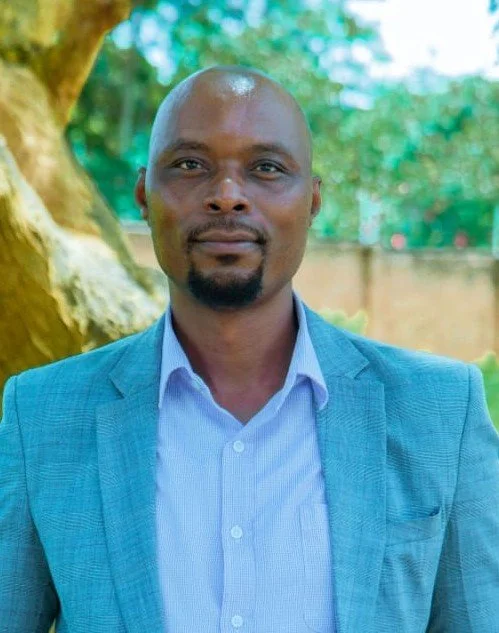
MICHAEL JOSEPH MABULA
What Did you enjoy about the program?
I thoroughly enjoyed the program's comprehensive and structured approach to the entire research lifecycle, as organized under Trainer 1101, 1102, and 1103.
From Trainer 1101.7 on Writing an Effective Literature Review to Trainer 1103.17 on The Dynamics of Manuscript Writing and Successful Publication, the curriculum left no gap unfilled.
As a professional who had learned many skills on the job, I appreciated finally having a systematic framework that connected every stage of research. This holistic structure helped me organize my existing knowledge while filling critical gaps, making me a more confident and capable researcher.
I was particularly excited about the modules on mixed-methods research under Trainer 1101.5 and the practical application of research designs in Trainer 1102.9.
Having worked extensively with quantitative data in my MEL roles, I had long recognized the need to integrate qualitative insights for a more complete understanding of development interventions.
The opportunity to master Trainer 1101.2 on Qualitative Research Methods, Trainer 1101.3 on Quantitative Research Methods, and Trainer 1101.4 on Sampling Methods equipped me to design studies that captured both statistical rigor and human context, a skill essential for impactful research.
The emphasis on legitimate grant writing and resource mobilization under Trainer 1102.13 was another aspect I genuinely valued. My experience managing donor-funded projects had shown me that securing funding is both an art and a science.
Learning structured techniques for writing winning proposals through Trainer 1102.10 on Research Proposal Writing and Trainer 1102.11 on Project Proposal Writing, combined with understanding global grant opportunities, will undoubtedly benefit my career and enable me to bring vital resources to the communities and organizations I serve.
Finally, the modules on Trainer 1101.8 on Referencing Styles and Tools including Mendeley & EndNote, Trainer 1103.14 on Research Ethics & Safety, and Trainer 1103.15 on Project Monitoring in the World of Technology provided me with skills to transform my project findings into credible, published contributions to the global body of knowledge.
PROFILE
Name: MICHAEL JOSEPH MABULA
Michael Joseph is a distinguished Research and Monitoring, Evaluation & Learning (MEL) and Program Management professional from Tanzania, whose academic journey began with a strong foundation in philosophy and community development. He earned his Bachelor of Philosophy from the Pontifical Urbaniana University in 2009, an experience that honed his analytical thinking and ethical reasoning abilities.
Driven by a passion for community empowerment, Michael pursued a Master of Arts in Community Development at Mount Meru University in Tanzania, graduating in 2016. This graduate program provided him with the theoretical frameworks and practical tools necessary to address complex development challenges, particularly those affecting marginalized populations. His master's thesis, "The Perceptions of University Students Towards Self-Employment," demonstrated his early commitment to understanding youth unemployment and entrepreneurial intentions, a theme that would continue throughout his career.
With over a decade of progressive experience in the international development and humanitarian sectors, Michael has established himself as a skilled professional in designing and leading research and evaluation projects. His expertise spans the entire research lifecycle, from conceptualizing robust methodologies and leading stakeholder interviews to coordinating large-scale field data collection and synthesizing findings into compelling reports for donors and policy audiences.
Michael is proficient in advanced statistical software including Stata, SPSS, and Power BI, enabling him to translate complex data into actionable insights for strategic decision-making by global leadership. His technical skills are complemented by strong competencies in strategic planning, data visualization, performance analysis, and policy advocacy. He is deeply committed to ethics, safeguarding, and Diversity, Equity, and Inclusion (DEI) integration across all research and program activities.
As Programme Manager for the €5.6 million EU-funded Tea Programme in Iringa, Tanzania, Michael demonstrated exceptional leadership in coordinating program implementation across three regions. He managed a team of 43 field staff to deliver climate-smart agriculture and sustainable livelihood interventions, ultimately impacting over 22,000 smallholder farmers and achieving a remarkable 48% increase in farmer income.
In this role, Michael developed and implemented comprehensive research and M&E systems, including results frameworks, data quality assurance mechanisms, and data collection tools. He managed all technical and narrative reporting to the donor and government institutions, while facilitating multi-stakeholder dialogue and strategic learning sessions for adaptive program design.
His commitment to community engagement ensured inclusive participation across gender and youth demographics, and he created baseline data collection tools that produced comprehensive reports, including market analyses, success stories, and lessons learned aligned with M&E frameworks.
Prior to this, Michael served as Senior Program Officer – Operations and M&E at IDH (2020–2024), where he managed the operations of the AGRI-CONNECT Boresha Chai Program, a four-year EU initiative in Tanzania's Southern Highlands. He oversaw M&E, finance, administration, communication, and reporting, while managing 12 cooperative sub-grants totaling EUR 309,662.57 that benefited 10,497 tea farmers. He also managed IDH's Salesforce-based ROSA system for grants oversight and developed training programs to improve user adoption.
As Monitoring, Evaluation, Research and Learning Coordinator at HELVETAS Swiss Intercooperation (2018–2020), Michael supported the EU RIPOMA Project by developing and implementing the project MEL system. He facilitated market linkages that enabled 80% of target farmers to access high-value markets, coordinated trainings achieving 75% adoption of good agricultural practices, and developed data collection tools using Kobo Toolbox while building staff capacity.
Earlier, as Monitoring, Evaluation and Learning Coordinator at Hakikazi Catalyst, with technical support from International Institute for Environment and Development - IIED (2016–2018), he coordinated MEL activities for a GBP 3.8 million DFID-funded climate finance project, supporting 34 community investments impacting 492,811 beneficiaries. His career began as Sector Research and Analysis Officer at World University Service of Canada (WUSC) from 2014 to 2016, where he provided technical leadership in analyzing economic subsectors under the Uniterra Program funded by Global Affairs Canada.
Michael remains committed to lifelong learning, evidenced by his recent certifications in GIS for Development, Data Governance and Management, and Data Visualization using Excel and Power BI (all 2025). He also holds various certifications and has completed specialized training with the World Health Organization, United Nations, and other leading institutions.
Michael is an active member of the Tanzania Evaluation Association (TanEA) and the African Evaluation Association (AfrEA), contributing to the advancement of evaluation practices across the continent. His volunteer experience as a social worker at Nyumbani Children's Home and as a Hospital Chaplain at Kenyatta National Hospital in Nairobi shaped his commitment to ethical, person-centered research.
Michael resides in Iringa, Tanzania, with his family. He is fluent in English and Swahili, and his multicultural educational background has equipped him with a unique global perspective and deep sensitivity to diverse cultural contexts. His professional journey reflects an unwavering dedication to using rigorous research and evidence to improve the lives of vulnerable communities across Africa.
PROFESSIONAL SUMMARY
Accomplished Research, Monitoring, Evaluation, & Learning (MEL) and Program Management Specialist with over 10 years of experience in the international development sector, providing expert research and evaluation for major donors including the European Union (EU), FCDO, Global Affairs Canada (GAC), Swiss Development Cooperation (SDC), and UNCDF.
Skilled in conceptualizing research methodologies, leading stakeholder interviews, coordinating field data collection and validation events, and synthesizing qualitative and quantitative findings into compelling reports for donors and policy audiences.
Extensive experience in designing and leading intervention-level evaluations, with a proven track record of assessing project performance against the full spectrum of OECD-DAC criteria (Relevance, Effectiveness, Efficiency, Impact, Sustainability). Expert in reconstructing intervention logic and theories of change to focus evaluations on core issues.
Deep sectoral expertise in private sector development (PSD), market systems development (MSD/M4P), and trade capacity building. Over 8 years of experience working directly with
Micro, Small, and Medium Enterprises (MSMEs) to enhance their competitiveness, improve compliance with standards (GAP, GMP), and facilitate access to markets.
Strong background in capacity building for institutional partners and MSMEs, having trained over 25,000 farmers, cooperative staff, and government extension officers in good agricultural and manufacturing practices, business development, and quality compliance.
Highly skilled in developing and implementing mixed-methods evaluation methodologies, managing large teams, utilizing advanced tools for data collection (KoBo Toolbox, Survey CTO), analysis (SPSS, Stata, NVivo), and visualization (Power BI) to produce rigorous, evidence-based findings.
Proven expertise in coordinating Key Informant Interviews (KIIs), Focus Group Discussions (FGDs), and surveys
Skilled in transcribing and translating qualitative data from Swahili to English with accuracy and attention to detail. Experienced in training and supervising enumerators, ensuring high- quality audio recordings, and maintaining ethical standards and safeguarding protocols throughout fieldwork.
Excellent communication and stakeholder engagement skills, with a proven ability to liaise effectively with government ministries, Non-Governmental Organizations, implementing partners and the private sector to ensure evaluations are participatory, credible, and useful.
CORE COMPETENCIES
Research and MEL Expertise: OECD-DAC Evaluation Criteria, Intervention Logic / ToC Reconstruction, Mixed-Methods Research Design, Baseline / Endline Assessments, Data Analysis.
Qualitative Data Collection: Key Informant Interviews (KIIs), Focus Group Discussions (FGDs), Surveys, Audio Recording, Transcription, Translation (Swahili to English).
Field Coordination: Multi-Site Fieldwork, Enumerator Training, Stakeholder Liaison, Daily Debriefings, Progress Reporting.
Data Management: Google Workspace, KoBo Toolbox, Survey CTO, NVivo, SPSS, Stata, Data Quality Assurance, Secure Data Storage.
Ethics and Compliance: Safeguarding, Data Privacy, Ethical Research Standards, OECD-DAC Criteria, Informed Consent.
Reporting and Analysis: Daily Updates, Debriefing Notes, Qualitative Analysis, Thematic Coding, MEL Plans, Indicator Tracking
Private Sector and Trade: MSME Development and Compliance, Value Chain Analysis (Tea, Rice, Horticulture), Trade Capacity Building, Market Access and Linkages, Good Agricultural Practices (GAP), Good Manufacturing Practices (GMP).
Technical and Management: Stakeholder Engagement (Gov't/Private), EU Donor Compliance and Reporting, Grant Management and Sub-grants, Capacity Building and Training, Project Cycle Management, Team Leadership and Coordination.
PROFESSIONAL EXPERIENCE
Program Manager (EU-Funded Tea Program). Stichting IDH – The Sustainable Trade Initiative, Tanzania March 2024 – March 2025
Managed the overall coordination of a EUR 5.6 million EU-funded program, with full responsibility for results monitoring, reporting, and stakeholder liaison. This role provided direct experience in managing projects under EU frameworks and reporting against EU standards.
Prepared comprehensive narrative and financial reports for the EU, ensuring all data was robust, verifiable, and aligned with program KPIs. This involved synthesizing complex information to demonstrate progress towards outcomes for over 22,000 beneficiaries.
Built and maintained effective relationships with private companies, Local Government Authorities (LGAs), and consortium members to ensure program activities were relevant and effectively supported MSMEs in the tea value chain.
Developed and implemented research and M&E systems and strategies, including plans, results frameworks, data quality assurance mechanisms, data collection tools and reporting mechanisms to track project performance and impact.
Conducted regular field visits to monitor program outputs and evaluate outcomes and early impacts, applying OECD-DAC evaluation principles to assess progress and inform adaptive management.
Ensured all program activities, focused on increasing farmer income and productivity, were aligned with national priorities and donor requirements.
Successful Research and M&E Assignments:
Adoption Study (Team Leader): Designed and led an adoption study to assess the uptake of good agricultural practices among 22,000 tea farmers. Measured adoption rates and identified factors influencing adoption, contributing to a documented 48% increase in farmer income.
Final Evaluation Support: Supported the overall coordination of the program's final evaluation, liaising with external evaluators, facilitating stakeholder access, and ensuring availability of quality program data for evidence-based assessment.
Senior Program Officer – Operations and M&E (EU-Funded Tea Program). Stichting IDH – The Sustainable Trade Initiative, Tanzania July 2020 – February 2024
Oversaw the Research, Monitoring and Evaluation, operations, and reporting for a 4-year, EU-funded program implemented in the Southern Highlands of Tanzania, providing hands-on experience with the full project cycle of an EU intervention.
Developed and implemented the program's MEL Strategy, including a comprehensive MEL plan, Indicator Performance Tracking Table (IPTT), and data collection tools, ensuring rigorous tracking of all project indicators.
Coordinated quantitative and qualitative research and evaluations, including baseline, midline, and endline studies and conducted regression and trend analyses to assess performance against KPIs using Stata and Power BI.
Coordinated KIIs and FGDs with tea farmers, cooperative leaders, and private sector stakeholders to assess adoption of good agricultural practices.
Managed transcription and translation of qualitative data from Swahili to English, ensuring accuracy and timely submission to the evaluation team.
Conducted daily debriefings with field teams and provided structured progress updates to the country team and donor.
Ensured all data collection activities adhered to safeguarding policies and ethical standards.
Uploaded organized datasets, transcripts, and debriefing notes to shared cloud platforms (Google Drive) for secure storage and donor access.
Managed the full cycle of 12 cooperative sub-grants (total EUR 309,662) benefiting 10,497 tea farmers. This included pre-award capacity assessments, compliance monitoring, and reporting, directly supporting the capacity of local enterprises.
Managed IDH's Salesforce-based system to track performance data, ensuring data quality and consistency for donor reporting.
Coordinated a gender assessment and integrated findings into program activities via a Gender Action Plan, ensuring the evaluation considered differential results across groups.
Developed and delivered training for program staff and partners on results-based management and donor compliance.
Successful Research and M&E Assignments:
Gender Assessment (Team Member): Contributed as a team member to a gender assessment identifying issues affecting women and men at household, farm, and cooperative levels; findings informed the development of a Gender Action Plan.
Baseline Survey Support: Supported the overall coordination of the program baseline survey, contributing to the design of data collection tools, training of enumerators, and oversight of field data collection across 10 regions.
Midterm Evaluation Support: Provided coordination support for the midterm evaluation, facilitating stakeholder engagement, organizing field visits for the evaluation team, and ensuring access to project documents and monitoring data.
Monitoring, Evaluation, Research and Learning Coordinator (EU-Funded RIPOMA Project). HELVETAS Swiss Intercooperation, Tanzania April 2018 – June 2020
Led the MEL system for the EU-funded RIPOMA project, which focused on strengthening the rice value chain. This role is directly relevant for its focus on private sector development, MSME support, and compliance with quality standards.
Coordinated extensive training programs for over 3,000 smallholder farmers and 20 SMEs on Good Agricultural Practices (GAP), Good Manufacturing Practices (GMP), post-harvest management, and branding. This directly contributed to a 75% adoption rate of improved practices and a 49% increase in farmer income.
Designed and implemented the full-cycle MEL system, including baseline and endline surveys, to assess project results. Analyzed data to measure adoption rates, income increases, and market access improvements.
Designed data collection tools, conducted piloting, field testing, data collection, analysis, and quality assurance, producing actionable insights to inform decision-making.
Led qualitative data collection across the rice value chain, including KIIs with government officials, millers, and cooperative leaders, and FGDs with farmer groups.
Translated and transcribed over 50 FGDs and KIIs from Swahili to English for analysis and reporting.
Designed and implemented data quality assurance protocols, including audio quality checks and verification of transcription accuracy.
Provided daily field updates to the project management team and supported coordination with local government authorities (LGAs).
Trained enumerators in digital data collection, informed consent procedures, and ethical research practices.
Conducted value chain actor mapping and facilitated market linkages, resulting in 80% of target farmers accessing high-value markets. Supported the development of business plans for SMEs in the rice value chain.
Contributed technical analysis to the development of the National Rice Development Strategy (2019-2030) and the National Postharvest Management Strategy (2019-2029).
Successful Research and M&E Assignments:
Evaluation of Quality Standards for Rice Millers (Team Leader): Led an evaluation to assess compliance with quality standards among 20 rice milling SMEs. Assessed adoption of good manufacturing practices (GMP), identified barriers to compliance, and provided recommendations for strengthening quality assurance in the milling sector.
Adoption Study (Team Leader): Designed and led an adoption study to measure the uptake of improved post-harvest management practices among 800 smallholder farmers. Analyzed factors driving adoption and documented a 75% adoption rate.
Gender Capacity Building Impact Assessment (Team Leader): Led an assessment to evaluate the impact of gender-focused capacity building activities on women's participation in rice value chains; findings informed gender mainstreaming strategies.
Gender Assessment (Team Member): Contributed as a team member to a gender assessment examining barriers and opportunities for women in rice production and marketing.
Midterm Evaluation Support: Supported the overall coordination of the project midterm evaluation, assisting with stakeholder consultations, data verification, and logistical arrangements for the evaluation team.
Final Evaluation Support: Supported the overall coordination of the project final evaluation, ensuring availability of quality MEL data and facilitating endline data collection activities.
Monitoring, Evaluation and Learning Coordinator (Decentralised Climate Finance Project). Hakikazi Catalyst / International Institute for Environment and Development (IIED), Tanzania June 2016 – March 2018
Led MEL activities for a GBP 3.8 million DFID/UNCDF-funded project, ensuring accountability for results and fostering organizational learning. This role strengthened expertise in working with government partners at the local level.
Led the development of project's MEL strategy and operationalized it in collaboration with consortium partners and government (PO-RALG).
Coordinated baseline survey and action-research activities, including resilience assessments and wellbeing ranking exercises, ensuring community voices were captured in the evaluation of project outcomes (impacting 492,811 beneficiaries).
Coordinated participatory qualitative data collection across three districts, including community resilience assessments and wellbeing ranking exercises (KIIs and FGDs).
Conducted daily progress reporting and debriefings with the consortium team and government partners.
Ensured high-quality audio recordings and managed the secure transfer and storage of all raw data.
Translated and transcribed qualitative data from Swahili to English for inclusion in evaluation reports.
Conducted capacity assessments and provided training on MEL frameworks for Local Government Authority (LGA) officials, building local ownership and data skills.
Conducted data audits and random verifications to ensure high-quality, accurate data for monitoring and reporting.
Successful Research and M&E Assignments:
Baseline Survey (Team Leader): Designed and led the baseline survey for the Decentralised Climate Finance Project across three districts (Monduli, Longido, Ngorongoro). Developed data collection tools, trained enumerators, and produced the baseline report establishing benchmarks for 492,811 beneficiaries.
Wellbeing and Resilience Assessments (Team Leader): Led participatory wellbeing and resilience assessments using wellbeing and resilience ranking exercises. Captured community-level perspectives on climate adaptation and contributed to project learning and adaptive management.
Sector Research and Analysis Officer (Uniterra Program)
World University Service of Canada (WUSC), Tanzania January 2015 – May 2016
Provided technical leadership in analyzing economic subsectors for the Global Affairs Canada-funded Uniterra Program, with a focus on creating economic opportunities for women and youth.
Conducted in-depth research on the horticulture and tourism sectors, identifying market access opportunities and challenges for MSMEs.
Developed data collection tools and conducted baseline surveys to support project
implementation and inform future programming.
Conducted KIIs and value chain analyses with MSMEs, government agencies, and industry associations in the horticulture and tourism sectors.
Managed baseline survey data collection, including training enumerators and ensuring data quality.
Transcribed and translated qualitative interview data to inform program design and donor reporting.
Managed organizational capacity assessments for potential partner organizations to ensure effective implementation.
Successful Research and M&E Assignments:
Fruits and Vegetable Value Chain Analysis (Team Leader): Led a comprehensive value chain analysis for the horticulture sector in Tanzania. Identified constraints and opportunities for MSMEs, with a focus on market access for women and youth.
Baseline Survey (Team Leader): Designed and led a baseline survey for the Uniterra Program, establishing key indicators for monitoring progress in the horticulture and tourism sectors.
EDUCATION AND PROFESSIONAL DEVELOPMENT
Master of Arts | Monitoring and Evaluation | The Open University of Tanzania (In Progress)
Master of Arts in Community Development | Mount Meru University, Tanzania (2016)
Bachelor of Philosophy | Pontifical Urbaniana University, Italy (2009)
RELEVANT CERTIFICATIONS
Research Methods (Research & Project Implementation) | Trainer International (2026)
GIS for Development | Center for Disaster Risk Management (2025)
Data Privacy and Protection | African Population and Health Research Center (APHRC) (2025)
Data Quality Assurance | African Population and Health Research Center (APHRC) (2025)
Monitoring, Evaluation, Accountability, and Learning Essentials | DisasterReady (2025)
Data Visualization and Reporting using Excel and Power BI | OUT (2025)
Career Boost with Power BI | Exodus Experts (2025)
Project Management Professional (PMP) Certification Training | TIPM (2024)
Field data collection, chains of transmission and contact follow-up | WHO (2020)
Gender and Environment Training | UN CC:Learn (2018)
Quality Benchmark Monitoring (QBM) Systems | HELVETAS (2018)
KoBo Toolbox and Geospatial Analysis Training | Helvetas Swiss Intercooperation (2018)
Mainstreaming Climate Change into local Government Development Plans | IIED (2017)
Wellbeing and Resilience Assessment | IIED (2017)
Adaptation Monitoring and Evaluation (TAMD Framework) | LTS Africa (2016)
PROFESSIONAL ASSOCIATIONS
Member, Tanzania Evaluation Association (TanEA)
Member, African Evaluation Association (AfrEA)